Voluntary administration
Voluntary administration: what it is, how it works and how long it takes
Authored by Patrick Loi, Managing Principal and Registered Liquidator, Greengate Advisory

Authored by Patrick Loi, Managing Principal and Registered Liquidator, Greengate Advisory
Voluntary administration (VA) is a formal insolvency process. An independent registered liquidator, the voluntary administrator, takes control of a company that is insolvent or likely to become insolvent. The aim is to save the company or its business or, if that isn’t possible, to give creditors a better return than an immediate liquidation. Creditors decide the company’s future at a meeting held about five weeks after the appointment.
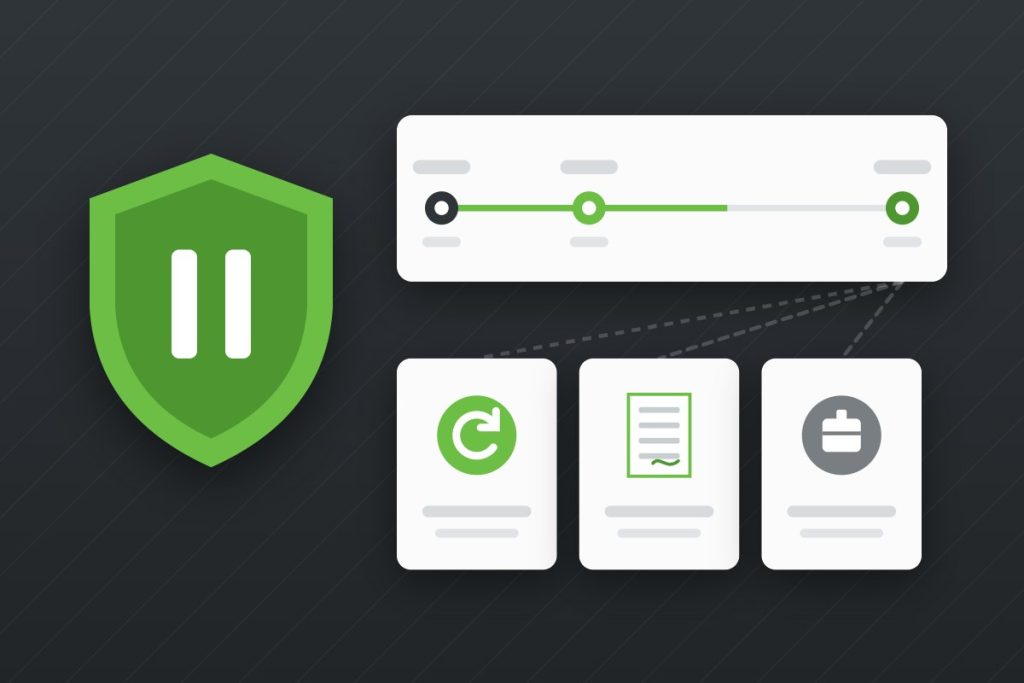
ARITA describes the purpose of voluntary administration as rescuing, if possible, a company in financial difficulty. The administrator takes control of the company and manages its affairs until the creditors decide its fate.
A voluntary administrator can be appointed by:
Once the administrator is appointed, the directors lose control of the company. They must still help the administrator, however, by handing over the company’s books, records and property.
Most voluntary administrations reach the creditors’ decision about five weeks (25 business days) after the appointment. The court can extend that period. If creditors approve a deed of company arrangement (DOCA), the deed then runs for the period it sets out. If creditors choose liquidation instead, the liquidator takes over from that point.
Two questions directors and staff ask most often have their own pages: what happens to employees in voluntary administration and what happens after voluntary administration.
At the second meeting, creditors decide to:
A DOCA is a binding agreement between the company and its creditors about how the company’s affairs will be dealt with. It binds all unsecured creditors, even those who voted against it. Secured creditors and property owners are bound only if they voted for it, unless the court orders otherwise. In a DOCA, employees keep the same priority for outstanding entitlements that they would have in a liquidation, unless a majority of eligible employees, in both number and value, agree to change it.
For what each outcome means for directors, guarantees and timing, see what happens after voluntary administration.
| Voluntary administration | Liquidation | |
|---|---|---|
| Purpose | Save the company or its business, or get a better return than liquidation | Sell the assets, investigate, pay creditors and end the company |
| Can the business keep trading? | Often, under the administrator’s control | Usually only briefly, to sell the business or assets |
| Who decides the outcome? | Creditors, at the second meeting | The company ends; the liquidator runs the process |
| Employee entitlements (FEG) | FEG not available unless the company later goes into liquidation | FEG may be available to eligible employees |
For a fuller side-by-side comparison, see voluntary administration vs liquidation.
If your company owes $1 million or less, small business restructuring (SBR) may also be an option, and the directors stay in control during that process.
Voluntary administration can suit a company that has a viable business but can’t pay its debts as they fall due, particularly when creditors are taking recovery action or a director penalty notice has arrived. The earlier you get advice, the more options you usually have. We can go through your company’s position in a confidential first conversation and explain whether VA, SBR, a payment arrangement or liquidation fits best.
Our registered liquidators act as voluntary administrators for small and medium businesses in Sydney, Brisbane and across Australia. We explain each step in plain English, Mandarin, Cantonese or Korean. Examples of our voluntary administration work:
Greengate Advisory is an Australian restructuring and insolvency firm led by registered liquidators. We advise company directors on voluntary administration, and our registered liquidators act as voluntary administrators. Our offices are in Sydney (Suite 2, Level 32, 31 Market Street, Sydney NSW 2000, (02) 8318 3699) and Brisbane (Suite 5GB, Level 5, 199 George Street, Brisbane QLD 4000, (07) 3868 1888), and we act for companies across Australia. The first consultation is free and confidential, in English, Mandarin, Cantonese or Korean. Contact us or email info@ggadvisory.com.au.
If unpaid tax is the pressure behind the appointment, see ATO tax debt.
A formal process in which an independent administrator takes control of an insolvent, or nearly insolvent, company. The goal is to save the company or its business, or to get creditors a better return than an immediate liquidation.
Creditors usually decide the company’s future about 25 business days (about five weeks) after the appointment, or 30 business days around Christmas and Easter. The court can extend this.
No. Voluntary administration aims to save the company or its business, and creditors then vote on its future. Liquidation ends the company. A voluntary administration can end in liquidation if creditors vote for it.
If the business keeps trading, employees are paid for work done after the appointment. Outstanding entitlements depend on the outcome, and the Fair Entitlements Guarantee is only available if the company goes into liquidation. Read our guide for employees.
The directors, a liquidator, or a secured creditor with security over all or substantially all of the company’s property.
While the company is in administration, a creditor can’t act on a personal guarantee from a director without the court’s consent. The guarantee is not cancelled, so get advice early.
Authored by Patrick Loi, Managing Principal and Registered Liquidator. Patrick has over 20 years of business restructuring and insolvency experience and founded Greengate Advisory. Meet our team.
This page is general information, not advice about your situation. Sources: ASIC Voluntary administration: a guide for creditors, a guide for employees and Insolvency for directors; ARITA Insolvency and company directors.
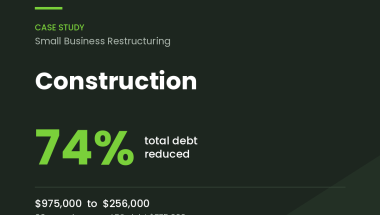
A plumbing contractor with more than 60 employees and over $10 million in turnover reduced about $975,000 of debt to about $256,000 through small business restructuring.

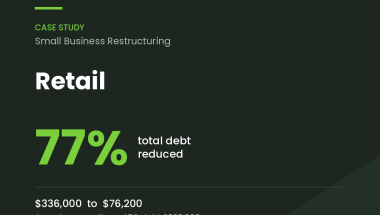
An aquarium supplies retailer trading online and from a showroom reduced about $336,000 of debt to $76,200 through a small business restructuring plan.
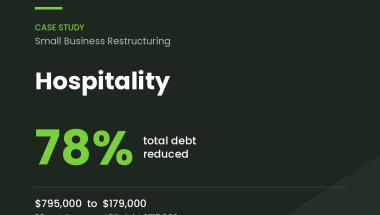
A restaurant employing 29 people reduced about $795,000 of debt, including $715,000 owed to the ATO, to about $179,000 through a small business restructuring plan.
Each co-owner is entitled to possess the whole property, so living there is not, by itself, a reason to pay the other co-owner. But the court can charge an occupation...
To buy out a co-owner, you agree a price for their share, usually based on a current valuation less their share of the mortgage and adjusted for what each of...
When a co-owner becomes bankrupt, their trustee in bankruptcy becomes the owner of the bankrupt’s share of the property, and the other co-owner cannot deal with the property without the...
Contact us for a free confidential consultation with one of our experts.
You can discuss your position and all possible options
in your language – Chinese, Korean, English and other Asian languages.
Get in touch today with experts that understand your needs.
Let us help you navigate through times of uncertainty.