Deed of company arrangement
Deed of company arrangement (DOCA): how it works and who it binds
Authored by Patrick Loi, Managing Principal and Registered Liquidator, Greengate Advisory

A deed of company arrangement (DOCA) is a binding agreement between a company and its creditors that sets out how the company will deal with its debts. It comes out of a voluntary administration, and creditors vote on it at the second creditors’ meeting. The aim is to keep the company or its business going, or to give creditors a better return than an immediate liquidation.
A DOCA is a formal, binding agreement that sets out how a company will deal with its debts and what its creditors will receive. For how it compares with winding the company up, see DOCA vs liquidation. It can only come out of a voluntary administration: creditors vote on the administrator’s recommendation at the second creditors’ meeting. The aim is to give the company, or as much of its business as possible, the best chance of continuing. Failing that, a DOCA should return more to creditors than an immediate liquidation would.
Each DOCA has its own terms. For example, a DOCA might be funded by contributions from future trading profits, a contribution from the directors or a third party, or the sale of particular assets. The deed then sets out how much the company will pay creditors, when, and in what order.
Usually, the former voluntary administrator becomes the deed administrator and makes sure the company carries out its commitments under the deed. They must tell creditors as soon as practicable after becoming aware of a material breach of the deed, and must lodge annual accounts of receipts and payments with ASIC. In addition, some DOCAs set up a creditors’ trust. As a result, the company can leave external administration sooner, and a trustee deals with creditors’ claims instead.
While the company is in a DOCA, how much control the directors get back depends on the terms of the deed. Once the company completes the DOCA, the directors regain full control, unless the deed provides for the company to go into liquidation at that point.
| Deed of company arrangement | Liquidation | |
|---|---|---|
| What happens to the company? | It can continue, and the directors regain control when the deed is completed (unless the deed provides otherwise) | The liquidator sells the assets and pays creditors in the order set by law, and then ASIC deregisters the company |
| How creditors are paid | As set out in the deed | From the sale of assets and any recoveries |
| Who decides? | Creditors vote on the proposal at the second meeting | Shareholders or creditors resolve to wind up, or the court orders it |
| Employee entitlements (FEG) | Employees keep their priority unless they agree otherwise; FEG is not available | FEG may be available to eligible employees |
If your company owes $1 million or less, small business restructuring (SBR) may also be an option. In SBR, the directors stay in control while a restructuring plan is put to creditors.
A DOCA can suit a company with a business worth saving that can offer creditors more than they would receive in a liquidation, for example from future trading profits or a contribution from the directors or a third party. However, it usually needs a realistic funding source and a proposal creditors will support. We can look at your company’s position in a confidential first conversation and explain whether voluntary administration and a DOCA, SBR, a payment arrangement or liquidation fits best.
Our registered liquidators act as voluntary administrators and deed administrators for small and medium businesses in Sydney, Brisbane and across Australia. We work with directors on proposals that creditors can assess, and we explain each step in plain English, Mandarin, Cantonese or Korean. Examples of our DOCA work:
A binding agreement between a company and its creditors that sets out how the company will deal with its debts. It comes out of a voluntary administration, and creditors vote on it at the second creditors’ meeting.
Generally, the directors or a third party propose a DOCA, usually after talking it through with the voluntary administrator.
It binds all unsecured creditors, even those who voted against it. However, it binds secured creditors, property owners and lessors only if they voted for it, unless the court orders otherwise.
It depends on the terms of the deed. A DOCA ends once the company has done what the deed requires, or earlier if creditors or the court end it.
If the company doesn’t sign the deed within 15 business days of the creditors’ vote, it automatically goes into liquidation. Similarly, if creditors or the court end a signed DOCA, the company may go into liquidation.
Not usually. A DOCA deals with creditors’ claims against the company. Creditors can generally still enforce a director’s personal guarantee outside the deed, although some deeds deal with guarantees in their terms, so get advice before anyone puts a proposal to creditors.
Authored by Patrick Loi, Managing Principal and Registered Liquidator. Patrick has over 20 years of business restructuring and insolvency experience and founded Greengate Advisory. Meet our team.
This page is general information, not advice about your situation. Sources: ASIC Deed of company arrangement for creditors, Voluntary administration: a guide for creditors and Insolvency for directors.
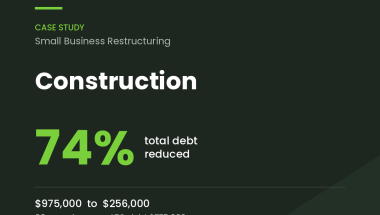
A plumbing contractor with more than 60 employees and over $10 million in turnover reduced about $975,000 of debt to about $256,000 through small business restructuring.

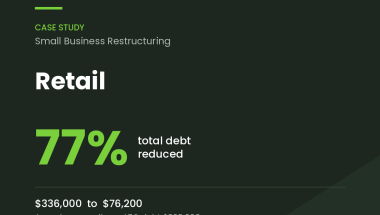
An aquarium supplies retailer trading online and from a showroom reduced about $336,000 of debt to $76,200 through a small business restructuring plan.
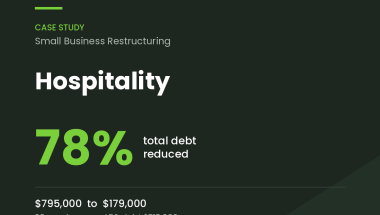
A restaurant employing 29 people reduced about $795,000 of debt, including $715,000 owed to the ATO, to about $179,000 through a small business restructuring plan.

If your company owes the ATO, you can pay in full, ask for a payment plan, restructure, or wind up. Acting before the ATO issues a director penalty notice keeps...
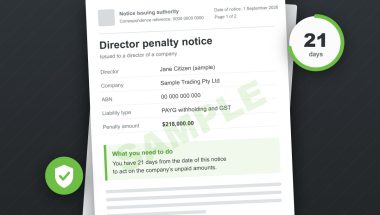
A director penalty notice (DPN) means the ATO can make you personally liable for some of your company’s tax debts. You have 21 days from the date the notice was...

A director ID is a 15-digit number that verifies who you are as a company director. Who needs one, when to apply, how to apply, and the penalties for not having one.

Contact us for a free confidential consultation with one of our experts.
You can discuss your position and all possible options
in your language – Chinese, Korean, English and other Asian languages.
Get in touch today with experts that understand your needs.
Let us help you navigate through times of uncertainty.