Personal insolvency agreement
Personal insolvency agreement (PIA): how it works and who it binds
Authored by Patrick Loi, Managing Principal and Registered Liquidator, Greengate Advisory

A personal insolvency agreement (PIA) is a formal, legally binding agreement between a person and their creditors, made under Part X of the Bankruptcy Act 1966. It is an alternative to bankruptcy. A trustee takes control of the person’s property and puts a proposal to creditors. If creditors accept it by special resolution, it binds all creditors with provable debts, and the unsecured debts covered are released once the agreement’s terms are met.
A personal insolvency agreement lets a person who can’t pay their debts offer creditors a deal instead of going bankrupt. The offer might be a lump sum, payments over time, the sale of particular assets, or a combination. Unlike a debt agreement, a PIA has no limits on the amount of debt, assets or income. That can make it the more practical formal option for business owners and directors with larger debts.
If creditors accept the proposal, all creditors with provable debts are bound, including those who voted against it. However, secured creditors keep their security. For example, a lender can still repossess and sell a secured car if the repayments aren’t kept up.
Entering a PIA disqualifies you from managing a corporation until you have fully complied with its terms, just as bankruptcy does, unless the court grants leave. Directors should notify ASIC using Form 296. If you are a director, plan with this in mind. The company may need another director while the agreement runs.
See our bankruptcy guide and liquidation vs bankruptcy.
A personal insolvency agreement must be administered by a registered trustee. We can help you work out whether an offer to creditors is realistic before you proceed. If your debts come from a company, for example through guarantees or director penalty notices, our registered liquidators can look at the company’s options at the same time. The first consultation is free and confidential, and we can explain the options in English, Mandarin or Korean.
A formal agreement between a person and their creditors under Part X of the Bankruptcy Act, as an alternative to bankruptcy. A trustee administers it.
By special resolution: a majority in number of creditors voting, who hold at least 75% of the dollar value of the debts voted.
It depends on your situation. A PIA can let you offer creditors a better return than they would get in bankruptcy and keep more control over the outcome, but creditors must accept it.
Not until you have complied with its terms, unless the court grants leave. Entering a PIA disqualifies you from managing a corporation.
No. Unlike a debt agreement, a personal insolvency agreement has no debt, asset or income thresholds.
Yes. PIAs are recorded on the National Personal Insolvency Index.
Authored by Patrick Loi, Managing Principal and Registered Liquidator. Patrick has over 20 years of business restructuring and insolvency experience and founded Greengate Advisory. Meet our team.
This page is general information, not advice about your situation. Sources: AFSA Lodge a PIA proposal, Your rights as a creditor in a personal insolvency agreement and Compare your insolvency options; ASIC Bankruptcy and personal insolvency agreements.
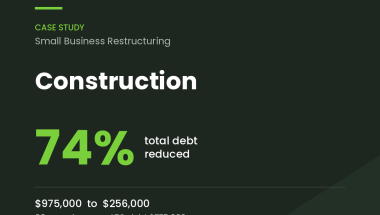
A plumbing contractor with more than 60 employees and over $10 million in turnover reduced about $975,000 of debt to about $256,000 through small business restructuring.

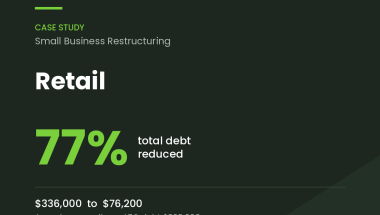
An aquarium supplies retailer trading online and from a showroom reduced about $336,000 of debt to $76,200 through a small business restructuring plan.
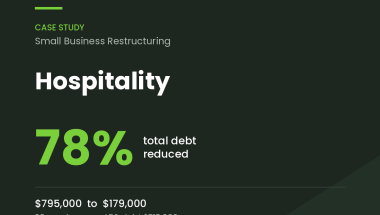
A restaurant employing 29 people reduced about $795,000 of debt, including $715,000 owed to the ATO, to about $179,000 through a small business restructuring plan.

If your company owes the ATO, you can pay in full, ask for a payment plan, restructure, or wind up. Acting before the ATO issues a director penalty notice keeps...
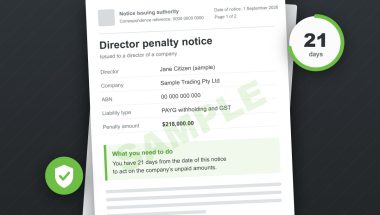
A director penalty notice (DPN) means the ATO can make you personally liable for some of your company’s tax debts. You have 21 days from the date the notice was...

A director ID is a 15-digit number that verifies who you are as a company director. Who needs one, when to apply, how to apply, and the penalties for not having one.

Contact us for a free confidential consultation with one of our experts.
You can discuss your position and all possible options
in your language – Chinese, Korean, English and other Asian languages.
Get in touch today with experts that understand your needs.
Let us help you navigate through times of uncertainty.