Bankruptcy notice
Received a bankruptcy notice? What it means and what to do in the 21 days
Authored by Patrick Loi, Managing Principal and Registered Liquidator, Greengate Advisory

A bankruptcy notice is a formal demand, issued by AFSA at a creditor’s request, to pay a debt of $10,000 or more that a court has ordered you to pay. You have 21 days from the day it is served to comply. If you don’t, you commit an “act of bankruptcy”, and the creditor can apply to court to make you bankrupt. Get advice straight away: the deadline is short and can’t simply be ignored.
A bankruptcy notice is issued by the Australian Financial Security Authority (AFSA) on the application of a creditor who holds a final judgment or order against you. It requires you to pay the debt, or make an arrangement the creditor accepts, within the time stated in the notice. For a creditor to apply:
You have 21 days from the date the notice is served on you. Count the days carefully from the date of service, not the date on the notice.
See our bankruptcy guide for what bankruptcy involves.
Ignoring the notice is the one option that is almost always worse.
For directors, a bankruptcy notice often comes from personal liability for a company’s debts, typically:
In these cases, the company’s position and the director’s position need to be looked at together. Resolving the company’s debt, for example through small business restructuring, may also reduce the director’s personal exposure.
If you have received a bankruptcy notice, contact us as soon as possible. We can review your position and explain your options before the deadline. If the debt came from a company, our registered liquidators can advise on the company side at the same time. The first consultation is free and confidential. Call (02) 8318 3699 in Sydney or (07) 3868 1888 in Brisbane.
21 days from the date the notice is served on you.
$10,000. Post-judgment interest can’t be included to reach that amount.
You commit an act of bankruptcy, and the creditor can apply to court within six months for an order making you bankrupt.
You can apply to the court to set it aside, for example if you have a counter-claim, set-off or cross demand. The application must be made before the time to comply ends.
No. It is a demand for payment. You only become bankrupt if a court makes a sequestration order, or if you apply for bankruptcy yourself.
Authored by Patrick Loi, Managing Principal and Registered Liquidator. Patrick has over 20 years of business restructuring and insolvency experience and founded Greengate Advisory. Meet our team.
This page is general information, not advice about your situation. Sources: AFSA Bankruptcy notice and Creditor’s petition.
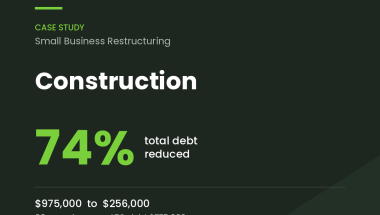
A plumbing contractor with more than 60 employees and over $10 million in turnover reduced about $975,000 of debt to about $256,000 through small business restructuring.

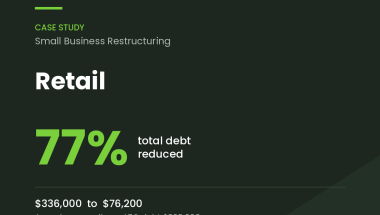
An aquarium supplies retailer trading online and from a showroom reduced about $336,000 of debt to $76,200 through a small business restructuring plan.
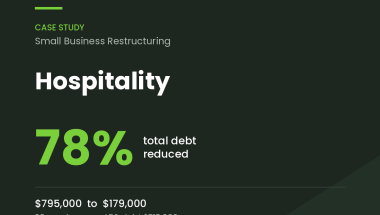
A restaurant employing 29 people reduced about $795,000 of debt, including $715,000 owed to the ATO, to about $179,000 through a small business restructuring plan.

If your company owes the ATO, you can pay in full, ask for a payment plan, restructure, or wind up. Acting before the ATO issues a director penalty notice keeps...
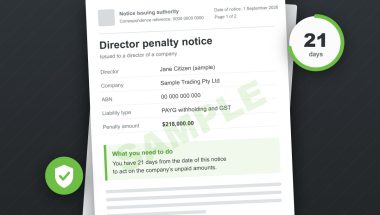
A director penalty notice (DPN) means the ATO can make you personally liable for some of your company’s tax debts. You have 21 days from the date the notice was...

A director ID is a 15-digit number that verifies who you are as a company director. Who needs one, when to apply, how to apply, and the penalties for not having one.

Contact us for a free confidential consultation with one of our experts.
You can discuss your position and all possible options
in your language – Chinese, Korean, English and other Asian languages.
Get in touch today with experts that understand your needs.
Let us help you navigate through times of uncertainty.