DIRECTOR PENALTY NOTICES
Received a director penalty notice (DPN) from the ATO?
Authored by Patrick Loi, Managing Principal and Registered Liquidator, Greengate Advisory · Updated 25 October 2026

Authored by Patrick Loi, Managing Principal and Registered Liquidator, Greengate Advisory · Updated 25 October 2026
A director penalty notice (DPN) is a letter from the ATO telling a company director they are personally liable for the company’s unpaid PAYG withholding, GST or superannuation guarantee charge. With a non-lockdown DPN, the director can usually avoid the penalty if, within 21 days of the date on the notice, the company pays the debt or appoints a voluntary administrator, liquidator or small business restructuring practitioner. With a lockdown DPN, which usually applies when the company lodged late, an appointment generally no longer removes the director’s personal liability.
The 21 days generally run from the date printed on the notice, not the day you open it, so time may already be short. What you can do depends on the type of DPN, which debts it covers and whether they were lodged on time. Below we explain how DPNs work, how to tell lockdown from non-lockdown, and what directors can do at each stage.
If you’ve just received a DPN
Unpaid PAYG withholding, GST (including luxury car tax and wine equalisation tax) and super guarantee charge (SGC). The ATO sends DPNs to your address registered with ASIC, so check it is up to date.
| Non-lockdown DPN | Lockdown DPN | |
|---|---|---|
| When | The company reported the PAYG withholding or GST within 3 months of the due date, or reported the super guarantee charge by its due date, but did not pay it | PAYG withholding or GST was not reported within 3 months of the due date, or super guarantee charge was not reported by its due date, including amounts the ATO has estimated |
| How the penalty can be remitted | Pay the debt, appoint an administrator, appoint a small business restructuring practitioner, or wind up the company, within 21 days | Only by paying the debt in full |
Behind on other ATO debts too? See ATO debt help for company directors.
Greengate Advisory is an Australian restructuring and insolvency firm led by registered liquidators. We advise company directors on director penalty notices and the company tax debts behind them. Our offices are in Sydney (Suite 2, Level 32, 31 Market Street, Sydney NSW 2000, (02) 8318 3699) and Brisbane (Suite 5GB, Level 5, 199 George Street, Brisbane QLD 4000, (07) 3868 1888), and we act for companies across Australia. The first consultation is free and confidential, in English, Mandarin, Cantonese or Korean. Contact us or email info@ggadvisory.com.au.
A formal ATO notice telling a director they are personally liable for a penalty equal to certain unpaid company tax debts, and how long they have to act.
Yes, for debts that fell due, or relate to periods, while you were a director. DPN after resigning as a director.
You have 30 days from appointment to make sure pre-existing debts are paid, or an administrator, restructuring practitioner or liquidator is appointed, to avoid becoming liable for them. New directors and the 30-day rule.
Yes. If the company has not lodged its returns, the ATO can estimate the amount, and director penalties can apply to the estimate. ATO estimates and DPNs.
No. It can stop further action while you keep to it, but it does not remit the penalty. Only the four options above do, and only within the 21 days. Does a payment plan cancel a DPN?
The law allows limited defences, for example where illness or another good reason stopped you taking part in managing the company, or where you took all reasonable steps to make sure the company paid, went into administration or restructuring, or was wound up. So get advice early, because you need evidence to support a defence. DPN defences explained.
Yes. Liquidation remits a non-lockdown DPN only if it happens within the 21 days. Otherwise you can remain personally liable after the company is wound up. Liquidation and DPNs.
Check which periods it lists and when the company lodged each BAS and super guarantee statement. If the company reported PAYG withholding or GST for a listed period more than three months after its due date, or not at all, or did not report super guarantee charge by its due date, that amount is locked down. One notice can include both. Lockdown vs non-lockdown DPNs explained
After the 21 days, the ATO can take court action, issue garnishee notices on your personal accounts, or use your personal tax refunds and credits to pay the penalty. An unpaid court judgment of $10,000 or more can lead to a bankruptcy notice. See what happens if you ignore a DPN. See liquidation vs bankruptcy for how personal liability works. If the company itself has been served with a demand, see statutory demands.
Yes, for a non-lockdown DPN: appointing a small business restructuring practitioner within the 21 days remits the penalty. The company must meet the SBR criteria, including total liabilities of $1 million or less. Small business restructuring and DPNs.
Yes. Each director can receive a DPN for the same debt. However, a payment by one reduces the amount the ATO can recover from the other.
No. Safe harbour can protect directors from insolvent trading claims, but it does not stop director penalties. In addition, tax lodgements must be up to date to use safe harbour.
Authored by Patrick Loi, Managing Principal and Registered Liquidator. Patrick has over 20 years of business restructuring and insolvency experience and founded Greengate Advisory. Meet our team.
Got a DPN? Talk to a registered liquidator today See our small business restructuring guide.
Sydney and Brisbane · English, 中文, 한국어
This page is general information, not advice about your situation.
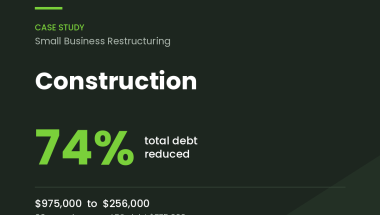
A plumbing contractor with more than 60 employees and over $10 million in turnover reduced about $975,000 of debt to about $256,000 through small business restructuring.

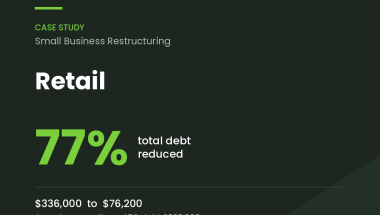
An aquarium supplies retailer trading online and from a showroom reduced about $336,000 of debt to $76,200 through a small business restructuring plan.
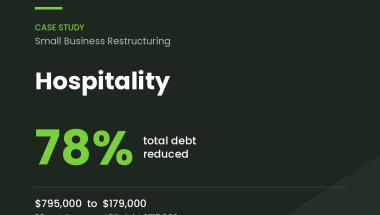
A restaurant employing 29 people reduced about $795,000 of debt, including $715,000 owed to the ATO, to about $179,000 through a small business restructuring plan.
Each co-owner is entitled to possess the whole property, so living there is not, by itself, a reason to pay the other co-owner. But the court can charge an occupation...
To buy out a co-owner, you agree a price for their share, usually based on a current valuation less their share of the mortgage and adjusted for what each of...
When a co-owner becomes bankrupt, their trustee in bankruptcy becomes the owner of the bankrupt’s share of the property, and the other co-owner cannot deal with the property without the...
Contact us for a free confidential consultation with one of our experts.
You can discuss your position and all possible options
in your language – Chinese, Korean, English and other Asian languages.
Get in touch today with experts that understand your needs.
Let us help you navigate through times of uncertainty.