Bankruptcy
Bankruptcy in Australia: how it works, how long it lasts and what it means
Authored by Patrick Loi, Managing Principal and Registered Liquidator, Greengate Advisory

Bankruptcy is a legal process in which a person is declared unable to pay their debts. It releases most debts and usually lasts 3 years and 1 day. A trustee, either the Official Trustee (part of AFSA) or a registered trustee in bankruptcy, takes control of the bankrupt’s property that is available to creditors. Bankruptcy applies to individuals, not to companies. An insolvent company goes into liquidation instead.
Bankruptcy is a formal process under the Bankruptcy Act 1966 for a person who can’t pay their debts as they fall due. The Australian Financial Security Authority (AFSA) manages the personal insolvency system. Each bankruptcy is administered by a trustee, who:
Bankruptcy is only for individuals. This includes sole traders and partners, who are personally liable for their business debts. A company can’t go bankrupt. When a company can’t pay its debts, the options include small business restructuring, voluntary administration and liquidation. See liquidation vs bankruptcy for how the two differ.
There are two ways:
Bankruptcy usually lasts 3 years and 1 day. For a voluntary bankruptcy, this runs from the day AFSA accepts the Bankruptcy Form. The trustee can object to the bankruptcy ending, for example if the bankrupt doesn’t cooperate. An objection can extend the bankruptcy, up to 8 years in total. When the bankruptcy ends, the person is released from most of the debts they had at the start of the bankruptcy.
Directors often come to bankruptcy through their company’s debts rather than their own. Although the company’s debts belong to the company, a director can become personally liable through:
If you can’t pay those personal liabilities, a creditor may issue a bankruptcy notice. Dealing with the company’s position early, for example through a restructuring plan or a payment arrangement with the ATO, can reduce the risk to you personally. See our ATO debt help guide.
The Bankruptcy Act offers other options, depending on your income, assets and debts:
Free, independent financial counselling is available from the National Debt Helpline on 1800 007 007.
If you are considering bankruptcy, or a creditor is pressing you for payment, talk to us before you act. We can explain your options, including the alternatives to bankruptcy. Our registered liquidators also advise directors on the company side, including restructuring, liquidation and personal exposure through guarantees and director penalty notices. The first consultation is free and confidential, and we can explain the options in English, Mandarin or Korean.
Usually 3 years and 1 day. The trustee can object to it ending, which can extend the bankruptcy up to 8 years in total.
No. An undischarged bankrupt is automatically disqualified from managing a corporation, unless the court grants leave. Once the bankruptcy ends, you can generally be a director again.
No. Bankruptcy applies only to individuals. An insolvent company may be restructured, placed into voluntary administration or liquidated.
The trustee may sell your house and other property that isn’t protected, and a secured lender can still enforce its mortgage. Get advice before you apply.
A trustee: either the Official Trustee, which is part of AFSA, or a registered trustee in bankruptcy.
Temporary debt protection, a debt agreement or a personal insolvency agreement, depending on your income, assets and debts.
Authored by Patrick Loi, Managing Principal and Registered Liquidator. Patrick has over 20 years of business restructuring and insolvency experience and founded Greengate Advisory. Meet our team.
This page is general information, not advice about your situation. Sources: AFSA What is bankruptcy?, Consequences of bankruptcy and Compare your insolvency options; ASIC Bankruptcy and personal insolvency agreements.
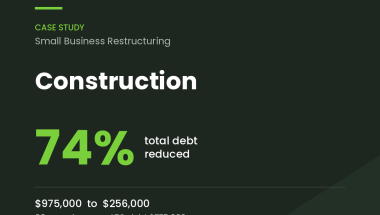
A plumbing contractor with more than 60 employees and over $10 million in turnover reduced about $975,000 of debt to about $256,000 through small business restructuring.

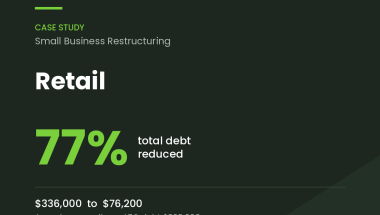
An aquarium supplies retailer trading online and from a showroom reduced about $336,000 of debt to $76,200 through a small business restructuring plan.
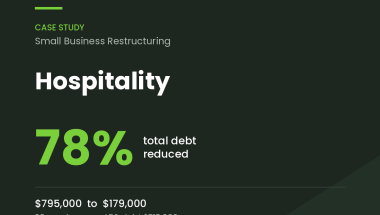
A restaurant employing 29 people reduced about $795,000 of debt, including $715,000 owed to the ATO, to about $179,000 through a small business restructuring plan.
If your company owes the ATO, you can pay in full, ask for a payment plan, restructure, or wind up. Acting before the ATO issues a director penalty notice keeps...
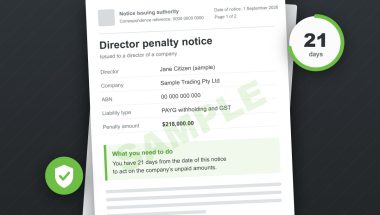
A director penalty notice (DPN) means the ATO can make you personally liable for some of your company’s tax debts. You have 21 days from the date the notice was...

Updated September 2026. Director IDs are now well established. Here is where things stand today: Source: ASIC, Director identification numbers (director IDs). The rest of this article was first publis

Contact us for a free confidential consultation with one of our experts.
You can discuss your position and all possible options
in your language – Chinese, Korean, English and other Asian languages.
Get in touch today with experts that understand your needs.
Let us help you navigate through times of uncertainty.