Receivership
Receivership: what it is and what it means for your company
Authored by Patrick Loi, Managing Principal and Registered Liquidator, Greengate Advisory

Receivership is when a secured creditor, usually a lender, appoints a receiver to take control of some or all of a company’s assets so it can recover the money it is owed. The receiver usually protects, collects and sells the secured assets, then pays the secured creditor from the proceeds.
In a receivership, the secured creditor acts through the receiver to take control of the company’s secured assets. A secured creditor can appoint a receiver under the terms of its security agreement. In some cases, the court can also appoint a receiver.
When the appointment gives the receiver power to run the company’s business as well, the receiver is called a receiver and manager. In that case, the receiver and manager may keep trading the business while it is sold.
The receiver’s main duty is to the secured creditor that appointed them. However, the receiver also owes duties to others, including the duty to take reasonable care when selling secured assets.
The directors stay in office, but their powers depend on the powers of the receiver. In practice, the directors lose control of the assets the receiver takes over. They must still help the receiver, for example by providing the company’s books and records.
From the company’s circulating assets, such as stock and debtors, the receiver must pay certain employee entitlements before the secured creditor. They are paid in this order: outstanding wages and superannuation, then leave entitlements, then retrenchment pay. If there isn’t enough to pay a category in full, the employees in that category are paid proportionately.
Unsecured creditors generally receive nothing from a receivership unless there is money left over after the secured creditor and the costs of the receivership have been paid. However, unlike in liquidation or voluntary administration, unsecured creditors can still start or continue legal action against the company. They can also apply to have the company wound up.
| Receivership | Liquidation | |
|---|---|---|
| Who appoints? | A secured creditor (or the court) | The shareholders, the creditors or the court |
| Who does it act for? | Mainly the secured creditor | All creditors |
| Which assets? | The secured assets | All of the company’s assets |
| Can unsecured creditors sue? | Yes | Not without the court’s permission |
A company can be in receivership and, at the same time, in liquidation, voluntary administration or a deed of company arrangement. For example, a liquidator may deal with the unsecured assets while the receiver deals with the secured assets.
Our registered liquidators act as receivers and managers for secured lenders, and we advise directors whose company’s lender is considering an appointment. We explain each step in plain English, Mandarin, Cantonese or Korean. Examples of our receivership work:
If your company is under pressure from a lender, getting advice early can open up other options, such as small business restructuring or voluntary administration.
A process in which a secured creditor appoints a receiver to take control of some or all of a company’s assets, usually to sell them and repay the debt owed to that creditor.
A secured creditor, under the terms of its security agreement. In some cases, the court can also appoint a receiver.
A receiver acts mainly for the secured creditor and deals with the secured assets. A liquidator acts for all creditors, deals with all of the company’s assets and winds up the company.
The directors stay in office, but their powers depend on the receiver’s powers, and they lose control of the assets the receiver takes over.
Yes. Unsecured creditors can still start or continue legal action against the company, and can apply to have it wound up.
Usually nothing, unless money is left over after the secured creditor and the costs of the receivership have been paid.
This page is general information, not advice about your situation. Source: ASIC Receivership: a guide for creditors.

An NDIS provider with more than $2 million owed to the ATO was restructured through voluntary administration and a deed of company arrangement funded from trading profits.


Receivers and managers appointed by a secured lender stabilised a 16-level Melbourne CBD office building, ran a competitive EOI campaign and sold it to a developer.

Capability: Insolvency, Restructuring & TurnaroundIndustry: TourismAppointment: Voluntary Administration followed by Liquidation Overview Subsidiaries of an ASX listed Company that operated high-e


If your company owes the ATO, you can pay in full, ask for a payment plan, restructure, or wind up. Acting before the ATO issues a director penalty notice keeps...
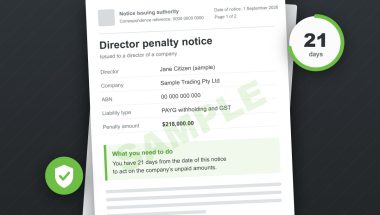
A director penalty notice (DPN) means the ATO can make you personally liable for some of your company’s tax debts. You have 21 days from the date the notice was...

Updated September 2026. Director IDs are now well established. Here is where things stand today: Source: ASIC, Director identification numbers (director IDs). The rest of this article was first publis
Contact us for a free confidential consultation with one of our experts.
You can discuss your position and all possible options
in your language – Chinese, Korean, English and other Asian languages.
Get in touch today with experts that understand your needs.
Let us help you navigate through times of uncertainty.